App Store Optimization (ASO)
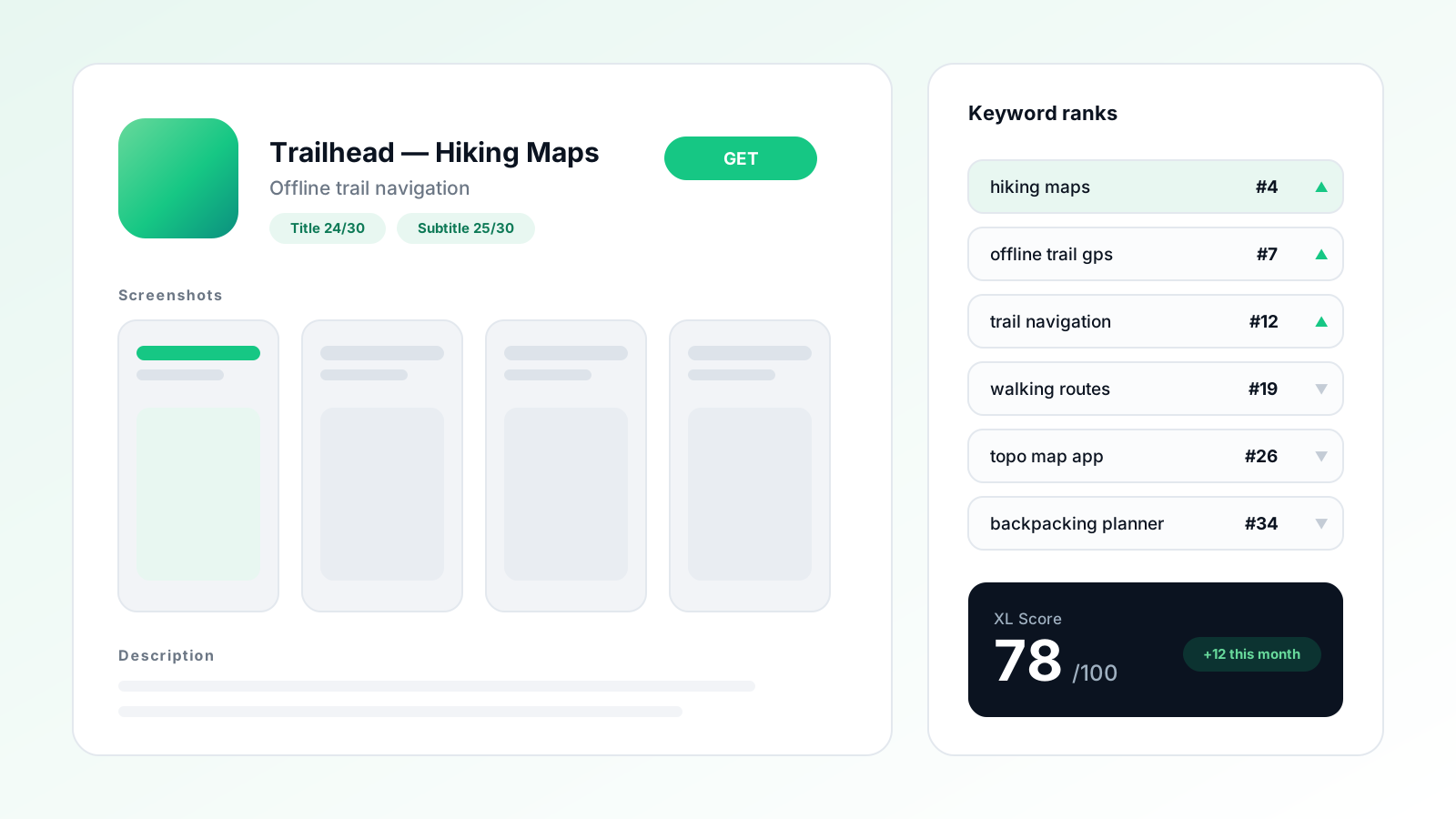
App store optimization (ASO) is the practice of improving an app's visibility and conversion rate inside the App Store and Google Play. It has two halves: keyword optimization, which decides which searches your app appears for, and conversion optimization, which decides how many of those viewers install. The levers differ by store — Apple indexes the app name, subtitle and a 100-character keyword field, while Google Play indexes the full store listing text — but the working loop is the same: research keywords, place them, test the listing creative, then measure impressions, product page views and install rate.
Key takeaways
- ASO splits into keyword optimization (getting found) and conversion optimization (getting installed) — most teams only do the first.
- Apple and Google index different fields, so a single set of metadata cannot be optimal on both stores.
- Ranking follows installs as much as installs follow ranking, which is why conversion rate is a ranking input, not just a revenue one.
- ASO is continuous: store algorithms, competitors and seasonal demand all move, so a listing set once decays.
What app store optimization actually is
ASO is often described as "SEO for apps", which is close enough to be useful and wrong in the details. Both disciplines optimize for a search algorithm you cannot see. But an app store is a closed system with a single result type, a much smaller index, and a conversion event — the install — that happens inside the same surface as the search.
That last point matters more than any other. On the web, a click is the end of the search engine's involvement. In an app store, the install is a signal the store immediately feeds back into ranking. Your conversion rate is therefore part of your ranking, which is why treating ASO as a metadata exercise leaves most of the value on the table.
- Keyword optimization — the app name, subtitle, keyword field and description that determine which queries surface your app.
- Conversion optimization — the icon, screenshots, preview video and ratings that determine whether a viewer installs.
- Technical hygiene — app size, crash rate, ratings volume and update cadence, all of which the stores weigh.
How the App Store and Google Play differ
The single most common ASO mistake is copying one store's listing to the other. Apple and Google index different fields with different rules, so metadata that ranks on one store is frequently dead weight on the other.
| Field | Apple App Store | Google Play |
|---|---|---|
| App name / title | 30 characters, indexed, highest weight | 30 characters, indexed, highest weight |
| Subtitle / short description | 30 characters, indexed | 80 characters, indexed |
| Keyword field | 100 characters, indexed, not public | Does not exist |
| Full description | 4,000 characters, not indexed | 4,000 characters, indexed |
| Developer name | Indexed | Indexed |
The ASO workflow that actually moves installs
- 1
Build the keyword universe
Pull every term your app could plausibly rank for from store autocomplete, competitor metadata and your own category. Volume estimates matter less than relevance at this stage.
- 2
Score and shortlist
Rank terms by relevance, search volume and how strong the incumbents are. Aim for a mix: a few ambitious head terms and a base of winnable long-tail terms.
- 3
Place the metadata
Put the highest-value terms in the title, the next tier in the subtitle or short description, and use the remaining fields to cover breadth without repetition.
- 4
Fix the conversion side
Rewrite the first two screenshots to answer the query the user just typed. Most listings show product features; the winning ones show the outcome.
- 5
Measure, then iterate
Watch impressions (did keyword changes work?) separately from install rate (did creative changes work?). Changing both at once tells you nothing.
What to measure
Installs are the outcome, not the diagnostic. When installs move, you need to know which half of ASO moved them, and only two intermediate metrics tell you that.
| Metric | What it measures | What a change means |
|---|---|---|
| Impressions | How often you surfaced in search and browse | Keyword targeting or ranking changed |
| Product page views | How many impressions became a visit | Icon, title or search-result creative changed |
| Conversion rate | Views that became installs | Screenshots, ratings, description or price changed |
| Retention (D1/D7) | Install quality | You may be ranking for irrelevant terms |
Why ASO is non-negotiable
Store search is still where most app discovery begins. A user who searches inside the App Store has already decided they want an app in your category — the only question left is which one. That is the highest-intent traffic your app will ever see, and it costs nothing per install.
The alternative is paying for it. Every point of organic ranking you fail to earn is volume you have to buy back through Search Ads or paid social, at a cost per install that only moves upwards. ASO is the one growth channel where the work compounds instead of resetting when the budget stops.
- Organic store search converts better than almost any paid channel, because intent is already established.
- Ranking gains persist between updates; paid volume disappears the day spend stops.
- Better organic ranking also lowers blended CPI, because paid installs feed ranking that then delivers free ones.
What is changing: AI, video and new storefronts
Three shifts are reshaping how apps get found. Store search results are increasingly personalized and summarized, which rewards listings that state clearly what the app does rather than listings stuffed with terms. Video is now a first-class surface — app previews auto-play on Apple and carry real conversion weight. And in the EU, alternative app marketplaces mean a listing is no longer a single artefact maintained in one place.
The practical response to all three is the same: the volume of listing work is going up, not down. More surfaces, more locales and more creative variants than a quarterly optimization pass can keep current.
- In-App Events and promotional content are indexed and can surface your app for queries the base listing misses.
- Custom product pages let a single app present many tailored listings to different audiences.
- LLM-assisted app discovery favours listings that answer plainly what the app is for and who it is for.
Frequently asked questions
What is app store optimization in simple terms?
It is the work of getting your app to show up for the searches your future users type in the App Store or Google Play, and making the listing convincing enough that they install once it does.
How long does ASO take to work?
Metadata changes are typically reflected in ranking within a few days to two weeks, depending on the store's re-indexing and your update review time. Conversion changes show up in the data almost immediately, but need enough traffic to be statistically meaningful.
Is ASO the same as SEO?
No. They share the idea of optimizing for a search algorithm, but app stores have a much smaller index, different indexed fields, and treat the install as both the conversion and a ranking signal.
Do I need a paid ASO tool?
Not to start. Store autocomplete, competitor listings and your own console data will get a first pass done. Tools become worth paying for when you need tracked ranking history and competitor movement over time.
What are In-App Events and how do they help ASO?
In-App Events are timed happenings — challenges, launches, seasonal content — that appear as their own cards on the App Store. They are indexed, so they can surface your app for queries your base listing does not cover, and they give the store a reason to feature you.
What is a custom product page?
An alternate version of your App Store listing with its own screenshots, video and promotional text, reachable by a unique URL. You can have up to 35 per app and point different campaigns at different pages to lift conversion.
appXL Research
App Store Optimization Research Team
The appXL research team analyzes App Store and Google Play ranking data across the apps our agent manages, and publishes what it finds.