How to read an app store ranking drop
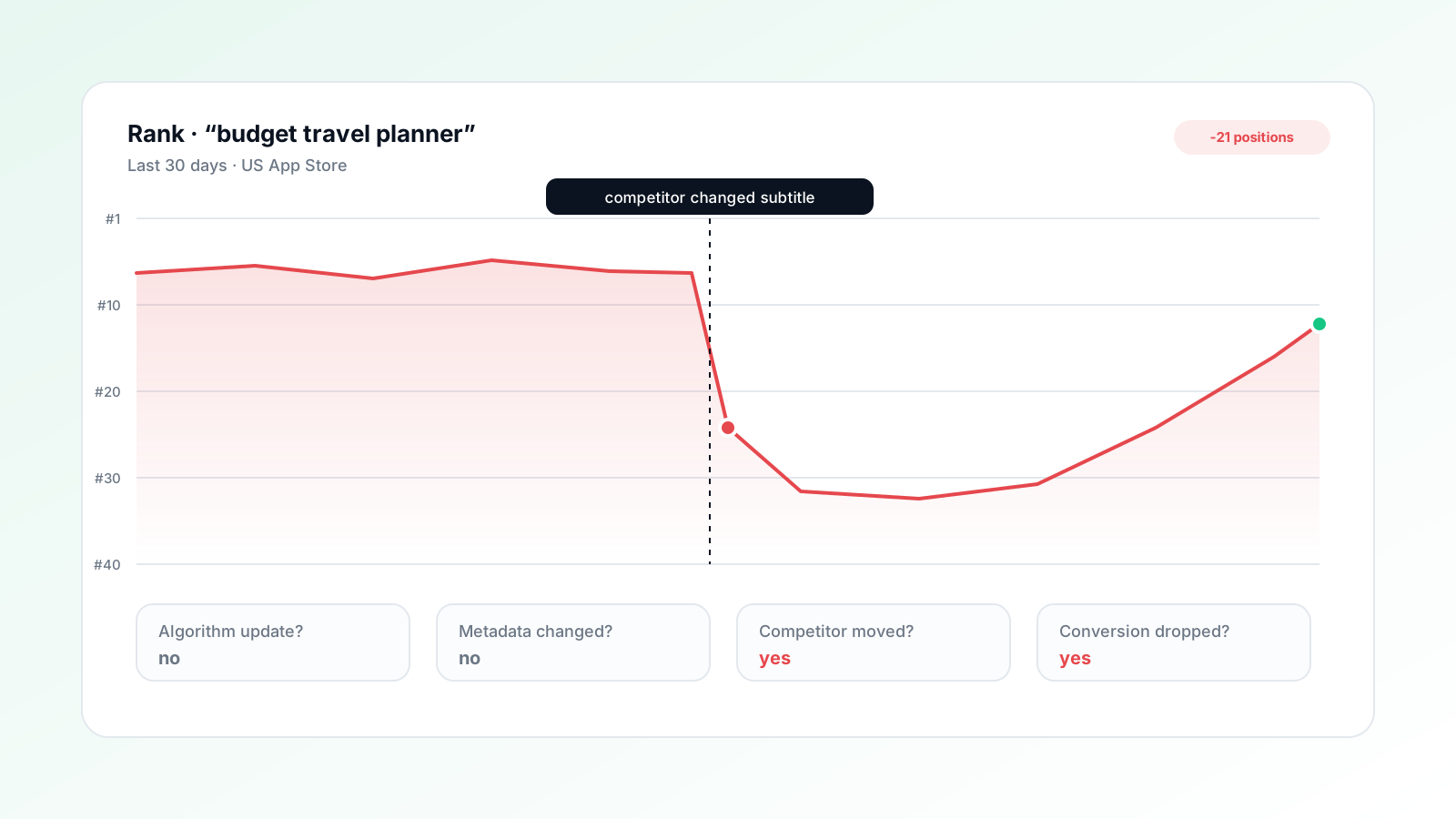
Before reacting to a ranking drop, establish whether it is real. Rankings are sampled rather than published, so mid-tail terms routinely move two or three places a day with no cause. Treat a drop as real when it persists for more than three days, appears across multiple related terms, or coincides with a measurable impressions decline. Then check, in order: your own last release, competitor metadata changes, rating movement, and finally category-wide shifts.
Step one: is it even real?
- Persistence: has it held for more than three consecutive days, or was it one sample?
- Breadth: did related terms move together, or only this one?
- Corroboration: did store-console impressions fall in the same window?
- Magnitude: is the move larger than this term's normal daily variance?
Step two: check causes in order of likelihood
| Check | What you are looking for | If it is this |
|---|---|---|
| Your last release | A metadata change within the previous 14 days | Revert the specific field, not the whole listing |
| Competitor metadata | A rival newly targeting the same term | Widen to adjacent terms rather than fight head-on |
| Rating movement | A recent average drop or review spike | Fix the underlying complaint; rating is a ranking input |
| Download velocity | A paid campaign ending or seasonality | Expect recovery; do not change metadata |
| Category-wide shift | Peers moving in the same direction | Store-side change; wait a week before acting |
Step three: what not to do
- Do not change three fields at once — you will never know which one worked.
- Do not switch tracking tools mid-investigation; different sampling will look like a further drop.
- Do not report daily positions to stakeholders as measurements. Report the fortnightly trend.
- Do not chase a term that never produced impressions. Losing it costs nothing.
Frequently asked questions
How long should I wait before reacting to a drop?
Three days for confirmation on mid-tail terms, longer in volatile categories. If impressions have not moved, there is nothing to react to.
Why do two ASO tools show different positions for the same keyword?
Because neither store publishes rankings. Every tool infers position from sampled searches, so different sampling produces different answers — none of them definitively correct.
appXL Research
App Store Optimization Research Team
The appXL research team analyzes App Store and Google Play ranking data across the apps our agent manages, and publishes what it finds.