Use cases: who appXL is built for
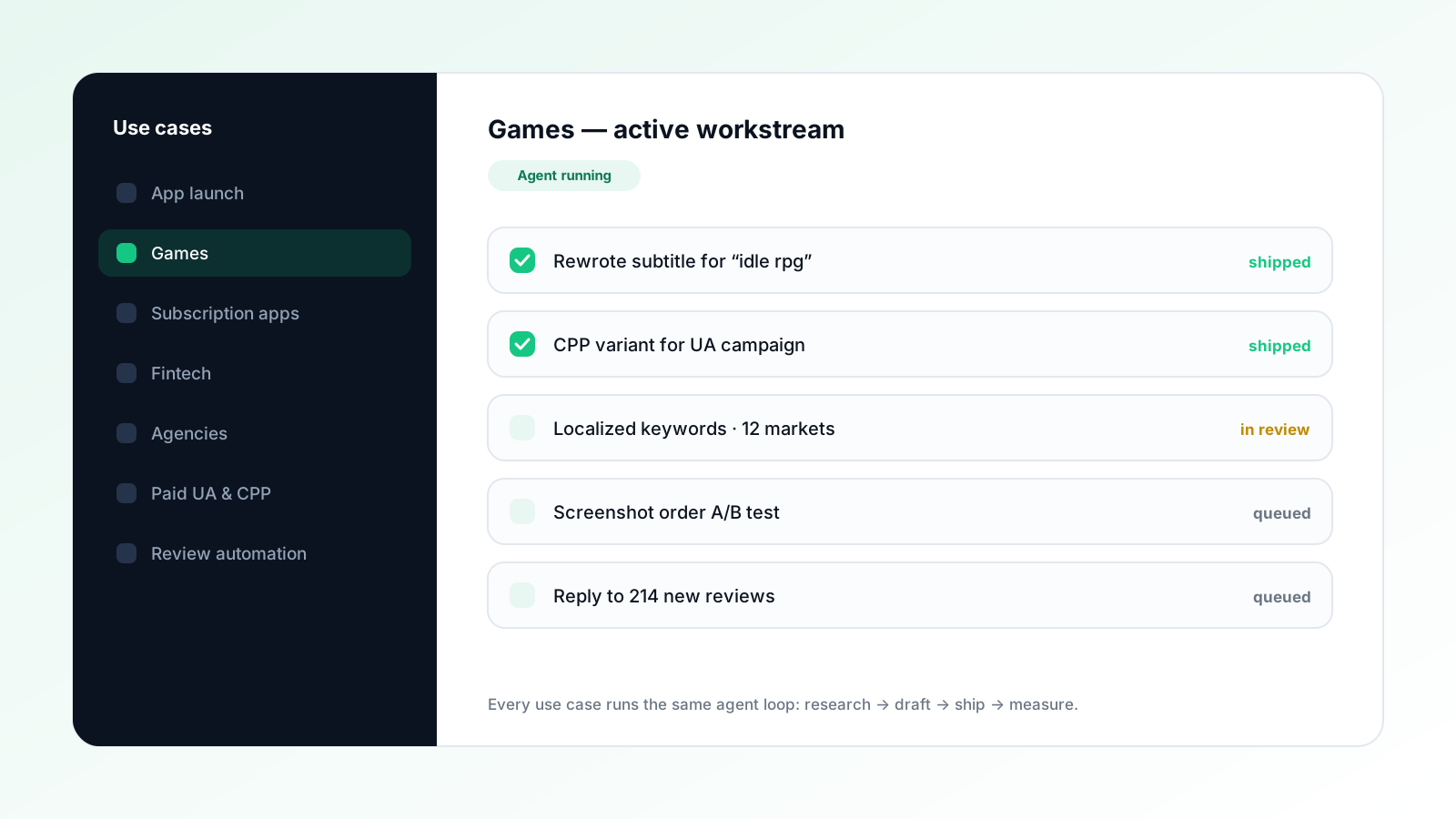
appXL suits teams where ASO is a real growth lever but nobody owns it full time. That covers solo developers with no ASO budget, growth teams whose ASO work loses every sprint to paid and product, agencies running listings across a client roster, and publishers maintaining dozens of apps at once. The job the agent removes is the same in every case — researching keywords, writing the metadata, shipping it, and watching what happened — but the constraint differs, so these pages describe the workflow for each situation rather than repeating one generic pitch.
Key takeaways
- The bottleneck is almost never insight — it is that nobody has time to write and ship the metadata.
- Portfolio operators (agencies, publishers) gain most from automation, because their work scales linearly with app count.
- Job-shaped needs — a launch, a paid UA push, a seasonal event — have deadlines that manual ASO routinely misses.
- Vertical context changes what to optimize for: trial starts, seasonality, trust signals or review policy.
How we compared them
Each page is written from the constraint that team actually has — headcount, app count, deadline or category dynamics — and states plainly where an agent stops being the right answer. Nothing here claims an outcome that depends on a product being good; ASO grows qualified impressions, not retention.
Find your situation
- 1
Indie developers
Best for: Solo builders with no ASO budget and no time
Getting the listing to a professional standard without learning the discipline or hiring anyone.
- 2
Growth teams
Best for: In-house teams where ASO loses every sprint
Making organic a standing workstream instead of the thing that slips when paid needs attention.
- 3
Agencies
Best for: Agencies servicing ASO across a client roster
White-label research and drafting so senior time goes into strategy and client relationships, not keyword sheets.
- 4
Publishers
Best for: Portfolios of ten to hundreds of apps
Consistent listing quality across a catalog where manual attention only ever reaches the top titles.
- 5
App launch
Best for: Pre-launch and the first 90 days
Getting indexed correctly from day one, when the listing has no performance history to learn from.
- 6
Paid UA with CPPs
Best for: Teams running Apple Search Ads or paid social
Matching custom product pages to ad creative so paid traffic lands somewhere that reflects the promise.
- 7
Seasonal and live-ops
Best for: Apps with events, seasons and content drops
Turning the live-ops calendar into store-side demand capture instead of an in-app-only moment.
- 8
Review automation
Best for: Teams drowning in reviews across markets
Replies handled at volume, and the recurring complaints fed back into metadata and roadmap.
- 9
Conversion rate optimization
Best for: Healthy impressions, disappointing installs
Fixing the half of ASO that has nothing to do with keywords: icon, screenshots, first impression.
- 10
Games
Best for: Studios competing on creative and seasonality
High-volume creative iteration, genre keyword sets and event-driven visibility spikes.
- 11
Subscription apps
Best for: Apps monetising through trials and renewals
Optimizing for the install that starts a trial and keeps it, not the cheapest install available.
- 12
Fintech apps
Best for: Regulated, trust-sensitive finance apps
Trust signals, compliant claims and market-by-market listing constraints handled deliberately.
- 13
Health and fitness apps
Best for: Seasonal wellness demand and health claims
Preparing for the January spike months in advance and staying inside store health-claim rules.
Pick by constraint, not by job title
| Your constraint | Start here |
|---|---|
| No ASO budget, no ASO knowledge | Indie developers |
| ASO keeps slipping behind paid and product | Growth teams |
| Listings for many clients, thin senior time | Agencies |
| Dozens of apps, only the top few get attention | Publishers |
| A dated launch with no performance history | App launch |
| Paid traffic landing on a generic page | Paid UA with CPPs |
| Impressions are fine, installs are not | Conversion rate optimization |
What the agent does in every case
- Audits the current listing field by field against the competitors that actually outrank you.
- Researches and scores keywords for each storefront you publish in, not just your home market.
- Drafts title, subtitle, keyword field and description changes that fit the character budgets.
- Ships them on your approval and records what changed, so movement can be attributed.
- Reads reviews and ranking movement, then proposes the next change.
Where ASO stops being the answer
ASO changes who sees your listing and how many of them install. It cannot make a weak product retain users, rescue a broken onboarding flow, or create demand for a category nobody searches.
If your install-to-retained-user rate is the problem, better store visibility makes the leak bigger rather than smaller. Fix the product, then turn the tap on.
Equally, if you have a healthy product and simply nobody finds it, this is the cheapest growth channel available — and the one most often left unattended.
Frequently asked questions
Do I need an ASO specialist to use appXL?
No. The agent does the research and drafting; you approve changes. Teams with a specialist tend to use it to remove the repetitive half of their week rather than to replace them.
Which use case applies if I run several apps for clients?
The agencies page. It covers white-label workflow, per-client reporting and how to price ASO retainers when the research is automated.
Is ASO different for games?
Materially. Games compete on creative volume and event-driven spikes far more than utility apps, and genre keyword sets behave differently. The games page covers it specifically.
appXL Growth
Mobile Growth Practice Lead
appXL's growth practice works directly with app teams on budgets, agency contracts and in-house ASO staffing, and reviews our cost and vendor coverage for accuracy.